



How do we deal with our dogs? Dogs get left in the back corridor or chucked in the kennels and it’s only when they start barking that we rush out to see how they are. Or they plod along with us from drive to drive completely ignored until they run in. We stand around chatting with a drink at the end of the day, and it’s only when he wanders off and starts nosing around in the game cart that we remember we have a dog with us.
Training a dog
Just as with a child in its developmental stages, so when training a dog; it is vitally important to remember to notice, appreciate and reward good behaviour as well as correct bad. If you fall into the habit of ignoring the dog when things are going fine but telling it off whenever it misbehaves, you will soon end up with a dog who is disobedient purely in order to get your attention. This can quickly become a vicious circle as the punishment becomes a reward in the dog’s mind, since it is the only time it gets interaction with you; then you are left with no real chastisement options.
Avoid getting into this situation by committing to the dog right from the outset. This is a fundamental reason why professional gundog handlers are so successful – because dogs are their full-time job. Obviously this isn’t the case for amateurs, but even so, if you are going to train or even just work a gundog successfully, you must be prepared to engage with it fully. That means you must watch it all the time through training exercises and in working situations. If you are training a peg dog, for example, you should accept the fact that your shooting will probably suffer for a while as you try to divide your attention between your dog and the birds overhead. Many keen amateurs ask a friend to shoot for them on training days so that they can concentrate on the dog, and it’s well worth it in the long run. (Read: British trained gundogs, the envy of the world.)
A dog’s body language
You need to be able to read your dog’s body language. There will be times when the dog deserves full-on praise and reward for effort (regardless of how successful it has been), or times when it just needs a little reassurance. Occasionally there will be moments when the dog should be chastised, but if your training is working, these will be rare.
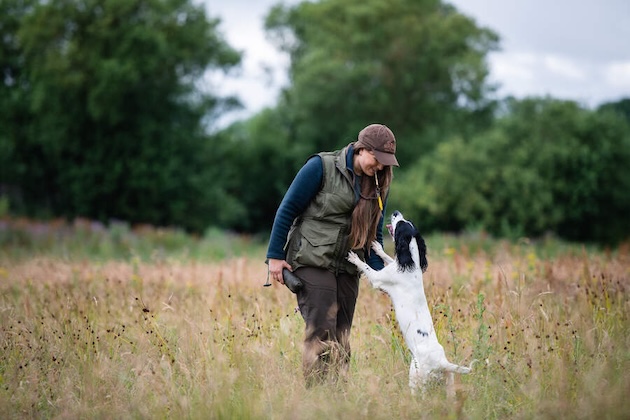
From the outset with a puppy be quick to praise and slow to criticise. When the puppy comes, sits, stays, heels or retrieves on command, give it verbal praise in a warm voice and possibly a cuddle from time to time. If you have a confident, excitable pup, try not to overdo the physical praise as things can get chaotic quite rapidly. Don’t worry about food treats either – the best reward is for the dog to know you are pleased by your tone of voice and your body language.
But don’t fall into the trap of praising the puppy when it has, in fact, been disobedient. How often do you hear people pleading with their dogs – “Come here, Rex, there’s a good boy, come here, good boy, come on,” while Rex proffers the old two-claw response.
Here’s how it should go: teach your dog the command: “come” is usually quickly learnt. Command the dog “come”. He comes, you praise him. If he doesn’t and you are sure he knows what you want, don’t praise him and don’t repeat the command. Instead, go up to him and tick him off verbally, using a gruff tone of voice. Then try again. He will come. This is so simple, but one of the rarest interactions you will see between novice handlers and their dogs.
Bad habits
Be aware of your own competence as a trainer, and kick bad habits such as failing to reward good behaviour, praising bad behaviour and repeating commands. If you plead with your dog or respond only to its disobedience, you are going to have to work hard to break the cycle. You must be decisive and plan ahead in your interactions with him. If he’s reached the stage of seeking chastisement, you must stop giving it. When he misbehaves, ignore him. Turn your back on him or just make him sit while you look over the top of his head. When he is obedient, give him plenty of praise and eye contact. Small cuddles and thrown retrieves also make good rewards.
Your voice is your most important tool in the praise/punishment balance. Many good trainers rarely need to do anything else except change their tone of voice. A sharp “ach, ach” is enough to bring a soft dog to heel, while a warm “there’s a good boy” will have him basking with delight and desperate to do more good things. Some people find it hard to change their tone sufficiently. Those who wouldn’t say boo to a goose certainly can’t find it in themselves to growl at a dog. It’s worth working at it – the voice of command can have an amazing effect on everything from an unwilling plumber to an errant husband.
Traffic light training
Confused about crime and punishment? Try the traffic-light system to check how and when to praise and what to do when things are going wrong.
The green light
Give the go-ahead to good behaviour by rewarding your dog with verbal praise in an upbeat tone of voice. Dogs also appreciate physical interaction and for most gundogs a tummy rub or similar is a more effective way of showing he has done well than giving a food treat. When training a youngster give plenty of praise if the dog is clearly trying to do his best (even if he’s not spot on). As the dog gets more experienced, save the praise to reward learning a new command or excellent performance. Be careful not to jazz up more excitable pups with loads of over-the-top praise. Always make sure you and the pup are calm again before you go on to the next exercise.
Amber light
Some dogs have needy personalities and will indulge in a lot of attention-seeking behaviour which should be neither praised nor punished, but simply ignored. A classic evasion displayed by a very affectionate, human-centred dog is to lie on the floor and cower when asked to go into the kennel. Don’t praise the dog in this situation, otherwise you will just end up pleading with him, but don’t punish him either because you will then give him the attention he craves. Instead, ignore him. Avoid eye contact, turn your back, even walk away. A stalemate will develop, but the dog always gives in first. Wait till you feel he’s on the verge of giving in and repeat the command. If he obeys, praise him. If not, go through the amber light process again.
Red light
With well-bred dogs and a sensible training process “red light” moments should be rare. But a dog with a lot of drive and intelligence will try to push the boundaries. You must be decisive and firm in correcting him. Make your displeasure clear immediately by using a harsh tone of voice and, if necessary, shake him by the scruff, lifting him right off his front feet. If you are uncertain whether the dog is disobedient or merely confused, recreate the situation and watch his behaviour again. Never chastise a dog when you have lost your own temper. Just put him in the kennel and try again when things are calmer.
This article was originally published in 2014 and has been updated.

For more in-depth articles with advice on training, subscribe to The Field Guide To newsletter and be updated every month. You’ll also receive a complimentary of Country Life’s Guide to Dogs.