




Recognising the signs of a river in distress is the first step towards restoring it to health. From water clarity to weed growth, here are the things to look for says John Bailey
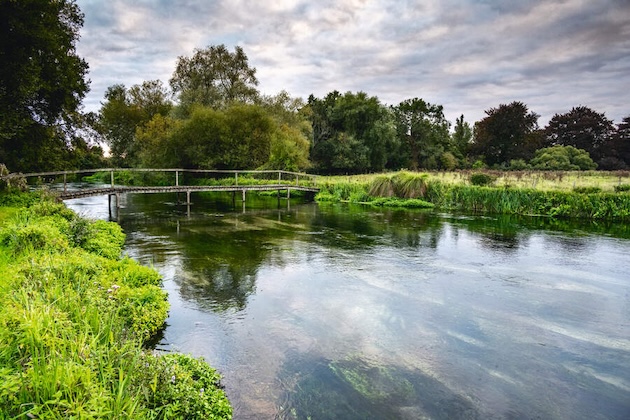
Whether anglers or simply Field-loving folk, we’re all aware that the rivers of the UK are in a state that ranges from poor to dire and that barely any are classed as satisfactory. But what are the signs of an unhealthy river and how do we diagnose the problems? My job takes me to 20 new rivers a year and I don’t need to be a citizen scientist to make a fast and accurate judgement on how any one of them is doing. I give my ratings over the page, along with a guide you can use to assess your own local river. I’ve made this introduction sound dry necessarily but I cannot adequately express the grief I routinely experience when it comes to the condition of our rivers. (You might like to read our recent interview with river conservationist Feargal Sharkey.)
1) The valley itself
There are the obvious factors here. Are you in the upper river where water is almost invariably cleaner or lower down where pollutants begin to stack up? Is the surrounding land broadly pasture with sheep and cows (good) or arable with cereals and potatoes (not so good)? While animal waste can be an issue, typically this is not as bad as the run-off from fertilisers, pesticides, herbicides, soil erosion, abstraction and the general diffuse water pollution associated with crops.
Catastrophe rating
It varies from river to river. On the Wye, which has been devastated by industrial poultry units (IPUs), arable farming, abstraction and sewage, my rating is 10/10. On the upper Driffield Beck in Yorkshire, where the worst polluters are golf courses and where pastures are well farmed, the score is as low as 3/10.
What to do
Acknowledging the issue would be a good start. It is widely understood that IPUs play a major role in the destruction of the Wye yet proposals for new sheds housing substantial numbers of birds are still considered. However, many of us are now paying extra for humanely raised chicken. The pressure is on the IPUs to clean up their act. Hi-tech farming is showing how chemicals on the land can be cut back to a bare minimum. We could be entering a new age.
2) The riverbanks
If the river is unnaturally straight that indicates it has not recovered from the effects of last century’s dredging. You want natural meanders and riffle-pool-glide sequences that show a river’s topography is in good health, with adequate tree or bush growth offering shade without blocking out all light and cattle fenced off from the river so they don’t poach the banks. A decent buffer zone between fields and the river will filter out run-off in heavy rain, and banks should be free of Himalayan balsam choking off indigenous plants.
Catastrophe rating
Along huge lengths of Norfolk’s River Wensum the dredging of the 1960s and 1970s has resulted in a featureless, fishless river where my score is 9/10. On the River Dane in Cheshire the sinuous curves of a natural river have survived and the rating is a refreshing 1/10.
What to do
Good news: these rivers can be restored. Activists Charles Rangeley-Wilson and Nick Zoll have performed miracles on the Nar and Stiffkey in Norfolk, while the Wild Trout Trust has shown the Environment Agency the way forward with wonderful restoration work. Action can succeed.
3) Water clarity
Water should have the crystal clarity associated with chalk and limestone rivers. If it is tinged brown this suggests too many nutrients; if green then it is overly phosphate rich. A river that rises extremely quickly after rain and is coloured a deep oxtail brown could suggest field run-off is the problem. Water that is a sickly grey? Sewage outflows are most likely to blame. Check the Rivers Trust Sewage Map for confirmation of a spill.
Catastrophe rating
Many lowland rivers have been fatally compromised by the combination of sewage spills and agricultural run-off, and for them the score is a complete 10/10. On rivers away from habitation and set in rough moorland, such as the Findhorn, the rating is a minimal 1/10.
What to do
The recent Cunliffe Report is right to advocate the removal of Ofwat (which the Government has confirmed will be scrapped) and its replacement by a body with teeth. Whether the eight new regional water authorities in England (plus one in Wales) will improve our rivers’ health remains to be seen.
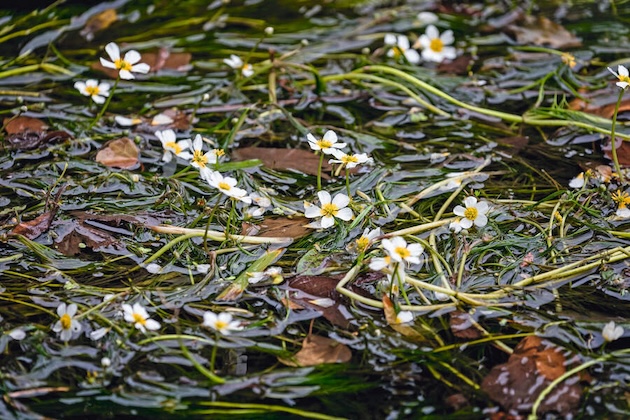
The right type of weed is crucial to a healthy river
4) Weed growth
Certain weeds suggest a river in great health. Abundant ranunculus is the perfect example: its summer flowers the crown of glory. If ranunculus, starwort and the rest are patchy or absent, then that’s bad news. In summer heat river over-enrichment can result in mass globules of vivid green algae that increasingly blot out the growth of healthy weeds.
Catastrophe rating
Without the right type of weed a river will surely die, so the rating is 10/10. Even on a river like the Itchen I have been shocked by how patchy ranunculus has been in places this summer. I’d score it at 3.5/10, which is a chalk stream wake-up call.
What to do
Years ago Frank Sawyer, legendary keeper on the Avon, showed how ranunculus could be replanted. We should think about fencing vulnerable weed growth off from swans until it becomes established.
5) The gravels
The shallow, quick riffle gravels are the hub of river life, where fish spawn and where insects love to live. Their health is critical. The texture needs to be loose and well aerated so fish eggs and insects get a flow of water-rich oxygen. It can become compacted and useless with a hard crust formed by soil, silt and sewage. These life-giving shallows could be disrupted by excessive canoeing in times of low water. Look for paint marks on larger stones where canoes have grounded and scraped their hulls. Weed, insects, fish and their eggs cannot combat this disturbance.
Catastrophe rating
In recent years I’ve been dismayed by how neglected these gravel areas have become in places along the Frome, the Welsh Dee and the Ouse in Bedfordshire. A rating of 8/10 is a fair and disappointing average for the scores of rivers I have studied.
What to do
Gravels can be restored by jetting, raking and breaking up the crust. The Westcountry Rivers Trust is expert at this and has issued a report on the tools and methods needed. It is hard work but essential for river life. Once restored, canoes must be kept off gravels in low-level conditions and when fish are spawning.
6) Fry numbers
Throughout the warmer months look for tiny fish in the shallows. These might be less than half an inch but they are the river’s future and the shallows should be black with them because mortality rates are high. If you have to look hard, the chances are recruitment is poor and fish stocks are in decline. Numbers of kingfishers will be reduced as each bird needs an ever-larger share of water to survive. If you can’t see small fish, lace a gravel area with two-millimetre trout pellets: in a healthy river, within seconds minnow-sized fish will swarm there.
Catastrophe rating
Naturally born river fish populations are at their lowest since the Ice Age. It is not just salmon and sea-trout that are dying but coarse fish too. There are exceptions such as the Trent and Ribble, which I’d rate at a healthy 3/10, yet overall the crash suggests we are looking at 10/10 on a national scale.
What to do
The good news is we can kick-start natural fish stocks if we are brave. In France the River Lot is now a great roach river because of stocking in great numbers and subsequent protection from avian annihilation.
Salmon stocking?
Providing the most modern methods are utilised, I think the majority of us would say yes to that too.
7) Insect life
Lack of healthy weed and fertile gravels can mean a reduction in variety and numbers of insects. Turn over larger stones in the margins and see how many caddis grubs cling to the undersides. There are many insect species but caddisfly populations are a good indicator to health or otherwise. Does the river seem thriving or moribund? If you see an increase in midges, even mosquitoes, this would indicate more silt on the riverbed, a substance conducive to bloodworm: the larvae of these ‘lesser’ insects.
Catastrophe rating
I’ve been appalled to see the decline in insect life on rivers such as the upper Bure in Norfolk, the Irfon in Wales and the upper Severn. Insects are the fount of all life, so many rivers are suffering a 9/10 rating with a national average of 7/10.
What to do
We know mayfly populations can be husbanded, and it is astounding how quickly insects can recover once rivers and gravels come back to health.
8) Fish health
Look closely at every fish you see or catch: their bodies tell a tale. If the tail fin is damaged, that spells otter damage and a fish that has escaped with its life. A gaping round hole in the area of the head or neck of a fish means a heron is to blame. If the flank of a fish has a slashing wound with scales removed then a cormorant or merganser is the culprit. Get to the river around dawn to see exactly what predators are at work: they’ll be gone by breakfast. Some river fish have small jellyfish-like parasites on their heads and pectoral fin roots. These are argulus: bloodsucking creatures that thrive in noxious silt on the bed of a less than- pure river.
Catastrophe rating
If juvenile fish are not coming through and mature fish are being predated, fish stocks are only going one way. Most rivers have vastly fewer fish in them now than last century so, nationwide, a sadly realistic 10/10.
What to do
Again, purer rivers, healthier gravels and predator control. The Avon Roach Project showed how wild fish can be brought on in safety, and whole populations can be revived in a few years.
9) Clues along the bank
As you walk or fish, keep your eyes open for remains of signal crayfish, often just bits of shell and pincers left by otters. Or mink. These are the most secretive and problematic of alien creatures. Chances are you don’t think you have a mink problem but I guess you do. Lack of waterfowl? No water voles? No more grass snakes? Remains of small silver fish? Mink at work.
Catastrophe rating
A full 10/10 if you are a water vole. Signal crayfish? Well, otters, perch, pike, chub and barbel eat them voraciously, so 7/10.
What to do
You cannot get rid of signals. Trapping results in hordes of adults but juveniles flourish, so the biomass stays the same. However, several River Trusts have shown that mink trapping is far more sophisticated and successful these days. Get rid of mink, reintroduce Ratty and I for one will rejoice.
10) Human activity
Along every river valley you’ll see the evidence: mills, weirs, storm drains, heavily cultivated fields, floodplain developments and a gradual erosion of the natural river catchment. There are things happening that you don’t see, such as the leaching of thousands of septic tanks and the inexorable pollution of the aquifer. There are too many of us demanding too much from our rivers and the land around them.
Catastrophe rating
Shetland 1/10. Southern England 10/10.
What to do
There is good news if we all take responsibility: put eco-products down our drains, don’t wash our cars, shower don’t bathe, pay more for chickens raised responsibly and accept water costs us more in order to pay for reservoirs and a better modern sewage system. We must hold slack politicians and water chiefs to account. Rivers are our lifeblood and we simply have to make them our first and foremost priority.
This article was originally published in the November 2025 issue of The Field. Why not sign up to one of our monthly newsletters to receive articles like this?