



The legendary frontman of The Who is still making music at the age of 82 but he revels in the peace and quiet of the East Sussex countryside, as he tells Rupert Bates
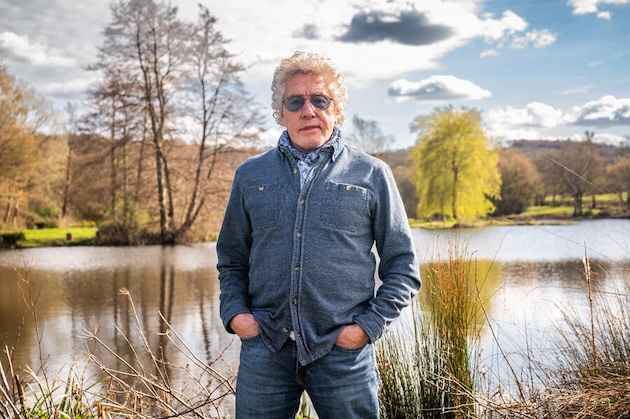
Sir Roger Daltrey comes from his Jacobean manor house on the hill to chat fishing, farming and brewing. We might talk about My Generation yet you sense he’s happiest speaking about the next one and those who will tend the land long after The Who legend has belted out his final rock anthem or cast his last fly. But not yet: at 82 Daltrey is still touring. “Music gives you up, you don’t give up music. I will go on making music for as long as I can,” he says.
It is difficult to think of a bigger contrast than Daltrey on stage – swinging the microphone by its cord, his extraordinary voice and presence filling the great arenas of the world – with where we are now, sitting beside the trout lakes of his estate in the East Sussex High Weald: the rock star unplugged. More The Sound of Silence than Baba O’Riley.
Lakedown is stunning but the acres didn’t just capture Daltrey’s heart, they saved his life. “It was 1971 when I moved here, when The Who was one of the biggest bands in the world,” he recalls. “We had no peace and were being pulled from pillar to post. When I saw the house and the view I thought ‘I’ll be all right’.” It would have been easy to hide behind private gates in wealthy seclusion; instead Daltrey, the East Sussex flag flying proudly, brought the community with him as his estate grew from 30 to 600 acres.
He employed young people to drive his vision while remaining passionately hands-on himself, finding any excuse to jump on a tractor or paint a wall. A chat with a friend in a local pub was the catalyst for digging the lakes, creating what has been described as ‘the loveliest small trout fishery in the UK’. So, here we are sitting in a cabin, Daltrey cradling a beer from Lakedown Brewing (another enterprise), a 19lb rainbow trout looking down from its glass case, threatening – Big Mouth Billy Bass style – to burst into a rendition of Pinball Wizard.
Then the bucolic peace is shattered as I mention the Government’s attitude to the countryside and treatment of farmers. Put it this way, Daltrey hasn’t lost his voice. This is no casual rant; he doesn’t only work the land, he studies it, living and learning how his acres can be best managed for livestock, crops, wildlife and natural habitats. He is exasperated by agricultural policy and political ideology. You suspect if a suit with a clipboard ever approached with an environmental form to fill in, they’d need to dredge the lakes – to find the missing clipboard you understand. If he saw anyone littering, he’d lasso them with his microphone lead.
“I am passionate about protecting this old Sussex valley for my grandchildren and beyond. The hedges have hardly changed over the centuries. The clay soil is best for grass, so we have Aberdeen Angus cattle, and a bit of arable,” Daltrey tells me. “The Government is driving farmers off the land. It is insane. Without a home-grown food industry, we are dust.”
It is not only the health of soil and water that preoccupies him, it is the nation’s physical health too and especially that of young people. He is a patron of the Teenage Cancer Trust. Although honoured by the knighthood last year for his music and charity work, he doesn’t want medals for his concerts. He wants meetings. “Not enough is being done by the NHS for young people. I wrote to [the then] health secretary Wes Streeting. No reply,” he reveals.
Daltrey is a Shepherd’s Bush boy by birth; fishing became an escape from an early age. “It is the best relaxant in the world and incredibly zen. I didn’t initially think of having a fishery here. It was old mates down from west London who told me I couldn’t keep this just for myself. They were right. Fishing grounds you,” he says. If Daltrey was to open his own trout lakes, he needed to learn all about trout farming and he did. He was also determined to understand rivers in their widest sense and how to tackle pollution.
“This is my favourite view,” he declares, suddenly stopping the Land Rover in its tracks, knowing every inch of the terrain. And there it is: a willow tree over a lake framed by a ‘Monet bridge’. With that a Spitfire flies overhead. “Not my doing,” laughs Daltrey. We talk beer with his son Jamie. The brewery was a lockdown idea, using the estate’s own spring-fed water, with the surplus grain fed back to the cattle. The result is a pale ale called Off The Hook, Sound – an alcohol-free Pilsner – and Wealdebeest craft cider.
When the time comes, I don’t want to leave. “Look at the light, the rawness of the trees,” says Daltrey. “I love the resilience of East Sussex.” Home for me is West Sussex, where one of my neighbours is David Courtney, who co-wrote Daltrey’s solo hit Giving It All Away. Daltrey has already given so much and will continue to do so – for the love of the music, for the love of the land, leaving a legacy for generations.
Sign up to our monthly newsletter The Field Guide for all things country-related. Dogs, shooting, fly-fishing, wildfowling, deer stalking and more.