




Walked-up days are a great learning opportunity for young shots but gun safety is paramount, says Sir Johnny Scott
Dear Freddie,
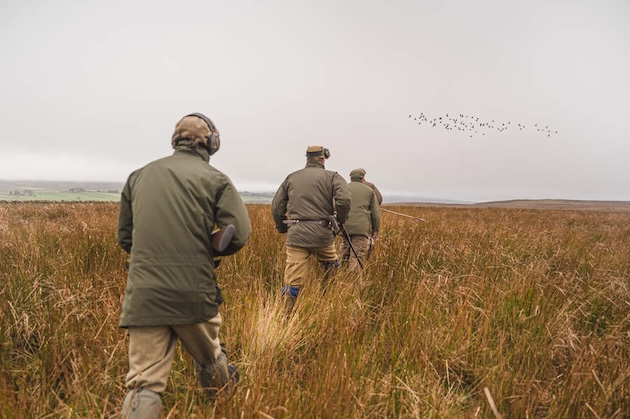
I am delighted to hear you have an invitation to a rough day just before Christmas.Some of my happiest shooting memories have been of rough days over dogs in December, when the air is cold and crisp, the trees are gaunt and leafless, the hedgerows are bare of berries and the ground has an ancient, musty smell of decay. Rough shooting really covers any form of shooting that is not a formal driven day and includes everything from one or two guns pot-hunting up hedgerows, scrubby corners of fields, spinneys, fodder crops or moorland fringes; ‘walk one, stand one’, where two teams take it in turns to walk and beat while the others stand on pegs; and four or five guns walking in line with a keeper and a couple of dog handlers, which is what I understand you will be doing.
Rough shooting
One of the great joys of rough shooting is the variety of quarry one might encounter, including pheasant, partridge, pigeon, rabbit, hare and even the occasional woodcock. Pigeons are on the general licence and permission must be sought. If there is some boggy ground, and the weather is not too hard, there might be some snipe about and, if water is lying, perhaps a mallard or teal. When your father and I were your age, rough days were a vital component in teaching the young about the broad spectrum of quarry species, their habitat and where to expect to find them; to learn to watch the behaviour of dogs when something is about to break cover; and the all-important gun safety when walking in line. In my experience, really good, knowledgeable shots all had an early grounding in rough shooting.
Curiously enough, circumstances have created a resurgence of interest in rough days, and I notice more shooting agents offering ‘mini walked-up days’ – basically rough days – that are proving extremely popular with guns. The devastating effect of avian flu, muddled bureaucracy from Defra about releasing gamebirds, and Putin’s war in Ukraine pushing up the price of raw materials has led to a number of big driven shoots putting down fewer birds and offering fewer let days. This is no bad thing, in my view. John Henry Walsh, Editor of The Field from 1857 to 1888, once remarked that it was a disgraceful thing when the quality of the day was measured by the weight of the bag, and this rings as true today as it did back then. Shooting should be about quality rather than quantity: a lower stocking rate inevitably means less disease, reduced mortality, much higher welfare standards, a greater value for the bird once it reaches the food chain and, ultimately, less for our detractors to agitate against.
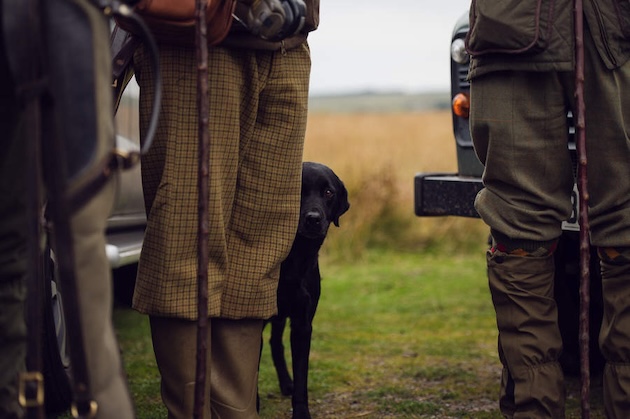
Breeks and gaiters are always useful on a walked-up day
What to wear on a walked-up day
Wear sensible clothing such as breeks, a lightweight waterproof coat in breathable material, boots to support the ankles, and gaiters, as you are likely to be pushing through brambles and walking through sodden fodder crops. A belt of cartridges, particularly in woodland or if they are on the other side of a hedge. Never swing through the line, know where the dogs are at all times and be absolutely certain it is safe before shooting at ground game. The line will stop when a dog is retrieving. If something else gets up, leave it – you should not shoot while a retrieve is in progress. Crucially, the line must keep silent; the last thing you want when rough shooting is to warn game of your approach. Stay alert, using your knowledge of habitat to anticipate where game may be sitting, and watch the dogs working: when the tail action becomes intense, it is usually an indication something is about to break cover. For birds going away from you, remember to start below and swing through, pulling the trigger as the barrels pass its head.
Freddie, I have enormously enjoyed our correspondence over the past year and hope to continue sharing bits and pieces of advice, which one day you will be able to pass on. For hundreds of years landowners have provided habitat for game that benefits all wildlife, which each generation has a duty to perpetuate – shooting and conservation have always gone hand in hand. This is an ethos best described by King George VI, who once said: “The wildlife of today is not ours to dispose of as we please. We have it in trust. We must account for it to those who come after.” Be safe, be good company, shoot straight and respect the quarry.
Yours Uncle J